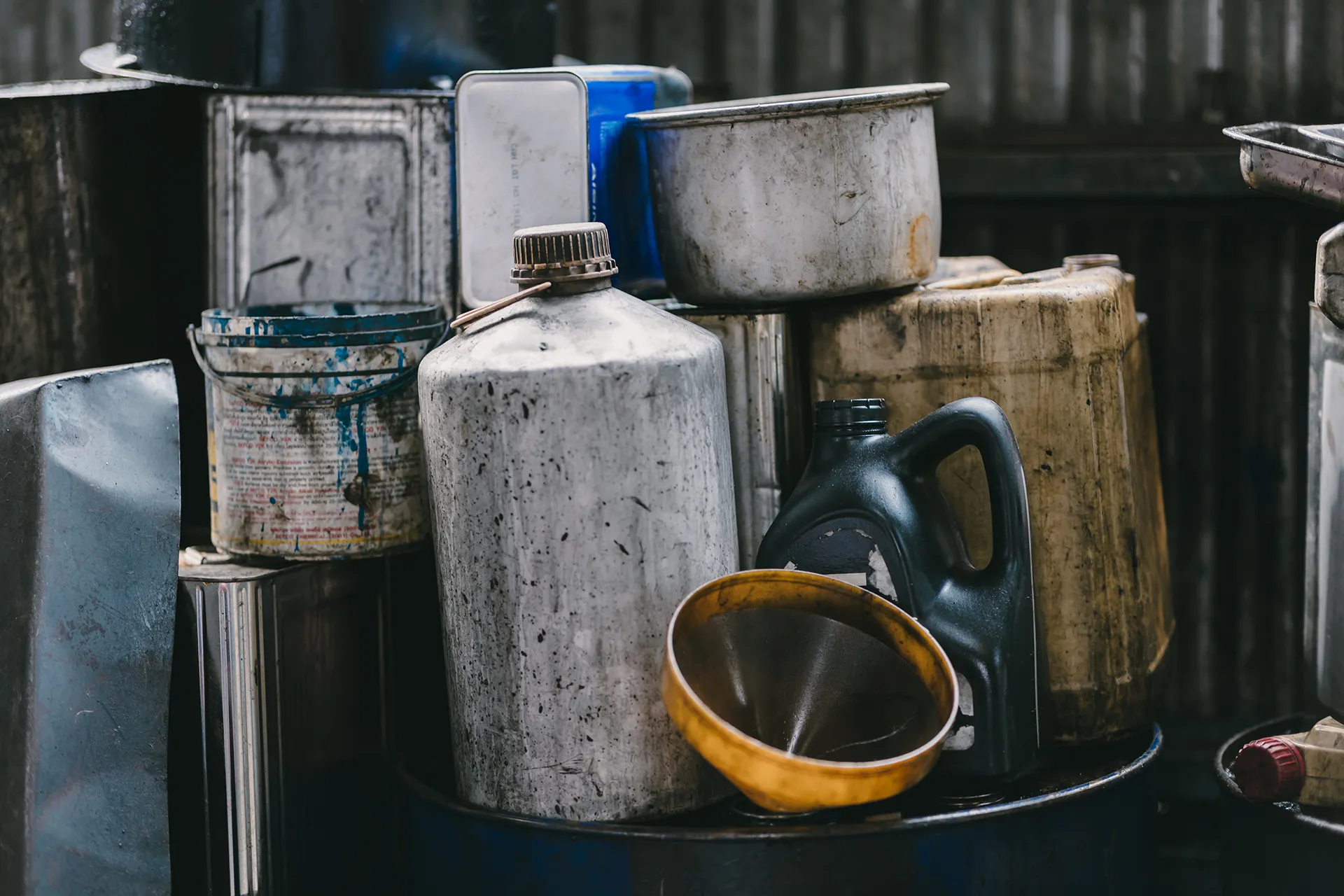
Hazardous and residual materials require structured management: inventories, storage, traceability, disposal channels, documentation, and operational practices. Without a clear plan and robust procedures, organizations are exposed to risks (OHS/environment), compliance gaps, and unplanned corrective costs.
A portion of industrial waste can be reduced at the source, reused, recovered/recycled, or upcycled. Without a diagnosis and integrated plan, recovery opportunities are lost, disposal volumes increase, and there is a lack of visibility regarding real costs and potential gains.
During deconstruction or dismantling, the presence of hazardous materials and the diversity of components complicate planning, segregation, and disposal channels. Furthermore, implementing systems (storage areas, containment cells, etc.) may require proper design and, depending on the case, ministerial permits or authorizations for operation.

HDS conducts audits for hazardous and residual materials management, then prepares and supports the implementation of integrated plans covering the hierarchy of options: reduction, reuse, recovery/recycling, upcycling, and disposal. Our goal: to structure practices and prioritize high-impact actions.
We design and implement management systems (storage areas, safe landfill/containment cells, etc.) and can assist in preparing ministerial authorization and permit applications related to the operation of these systems, when required.
HDS provides expertise in the management and recovery of industrial waste and supports eco-deconstruction projects: hazardous and non-hazardous material inventories, estimation of disposal costs, and recoverable amounts through recovery channels (metals, wood, concrete, etc.). We also offer training to ensure the sustainable implementation of best practices.
An audit and an integrated plan clarify "what, where, and how to manage": procedures, responsibilities, documentation, and channels. The result: safer management, fewer gaps, and a better ability to demonstrate the organization’s due diligence.
By applying the management hierarchy (reduction → recovery → disposal), you decrease the volumes sent for disposal, improve budget predictability, and capture recovery opportunities. Decisions are supported by data and technical/economic analysis when necessary.
For eco-deconstruction sites or the setup of storage/containment systems, structured planning reduces unforeseen issues, improves material segregation, and facilitates access to recovery channels. You gain efficiency, traceability, and overall environmental performance.
Audits and plans for the management of hazardous materials and residual materials, recovery of industrial residues, projects for the ecological deconstruction of buildings, training.
Combining environmental expertise and industrial hygiene, HDS supports companies in the proactive management of risks and compliance. We protect your personnel and facilities through cutting-edge expertise and personalized guidance.