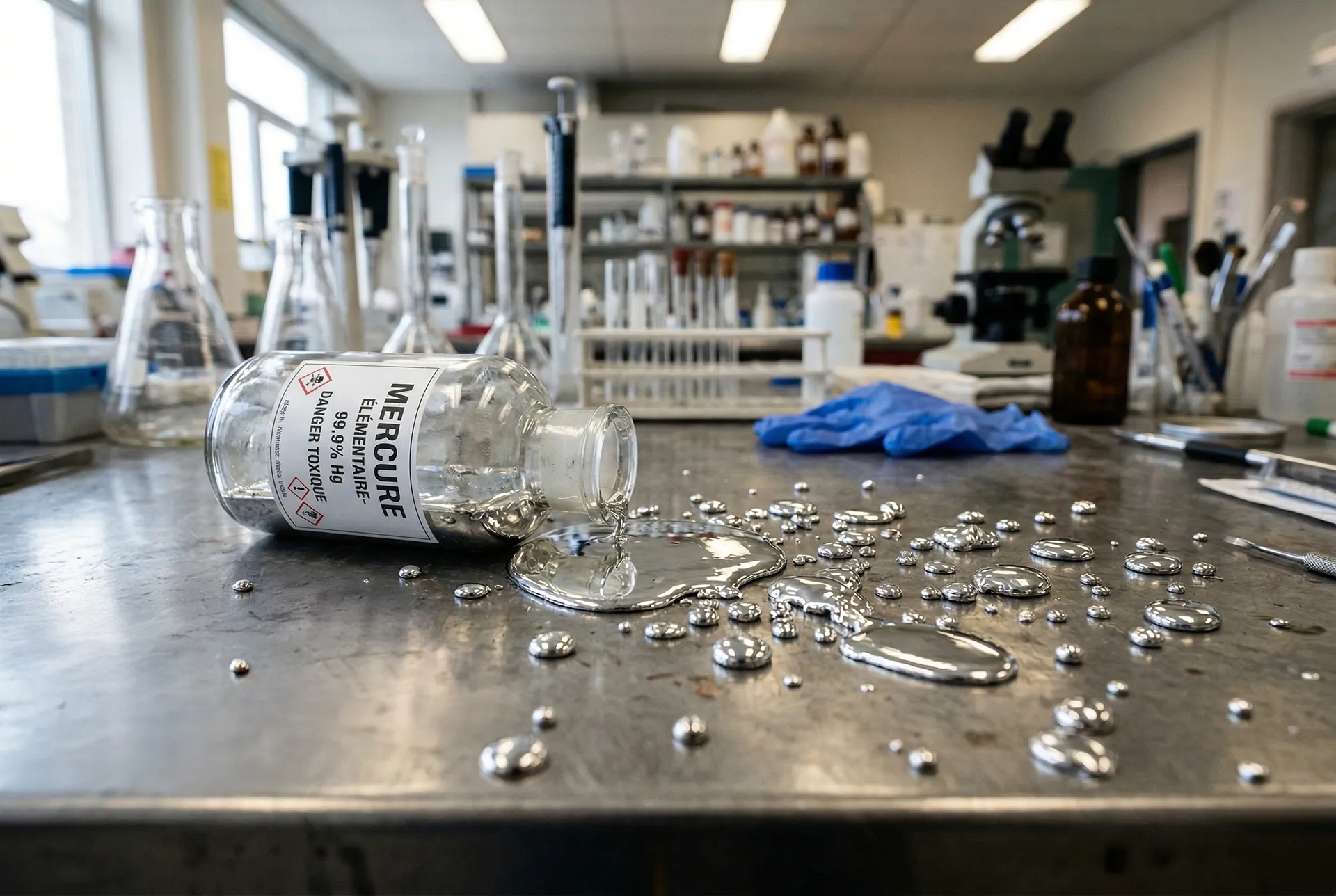
During a spill, first responders may not always have the correct reflexes for mercury. Certain actions (sweeping, using a domestic vacuum, moving contaminated objects) can fragment the mercury, increasing dispersion and exposure. Without a rapid diagnosis, the situation can worsen and expand the area requiring treatment.
Mercury migrates easily: it volatilizes, travels through air currents, and condenses on colder surfaces before re-emitting as temperatures fluctuate. Identifying "trap zones" (cracks, drains, baseboards, joints, equipment) requires significant experience to minimize the mobility of the contaminant.
Mercury poses a significant toxicological risk. Incident management involves strict OHS requirements, containment, specialized cleaning, control measures, and the proper disposal of contaminated materials. Without traceability and post-decontamination validation, it can be difficult to justify a safe return to normal operations.

HDS conducts an inspection within 24 hours to establish a diagnosis, define the impact zone, and implement immediate measures: access control, containment, tailored ventilation recommendations, and prevention of high-risk actions. A rapid action plan and budget are provided to frame the intervention and limit further damage.
Our teams proceed with mercury recovery and the decontamination of affected surfaces and materials, combining physical techniques with specific chemical treatments when necessary. Interventions are adjusted based on surface types, accessibility (crevices, joints, drains), and building occupancy to ensure maximum efficiency.
Following decontamination, HDS performs a validation visit with control measures (air and surfaces) to verify work effectiveness and support re-occupancy. We also manage hazardous waste disposal through appropriate channels and produce a detailed report documenting actions, results, and recommendations.
Specialized intervention from the outset limits exposure, reduces mercury dispersion, and secures occupants and responders through containment measures and proven methods.
By structuring the intervention (Diagnosis → Plan → Decontamination → Validation), we accelerate decision-making, minimize the scope of work, and facilitate a return to operations as quickly as possible.
Control measures, waste management, and intervention reports: you receive clear and defensible documentation to demonstrate due diligence, justify actions taken for potential insurance claims, and support regulatory compliance.
Intervention with respect to various type of mercury spills, first inspection within 24 hours, proposal of an action plan and budget to decontaminate the premises, physical and chemical decontamination, post-decontamination visit including monitoring of residual mercury in air and on surfaces, intervention report.
For any emergency, please contact 514-922-0556
Combining environmental expertise and industrial hygiene, HDS supports companies in the proactive management of risks and compliance. We protect your personnel and facilities through cutting-edge expertise and personalized guidance.